
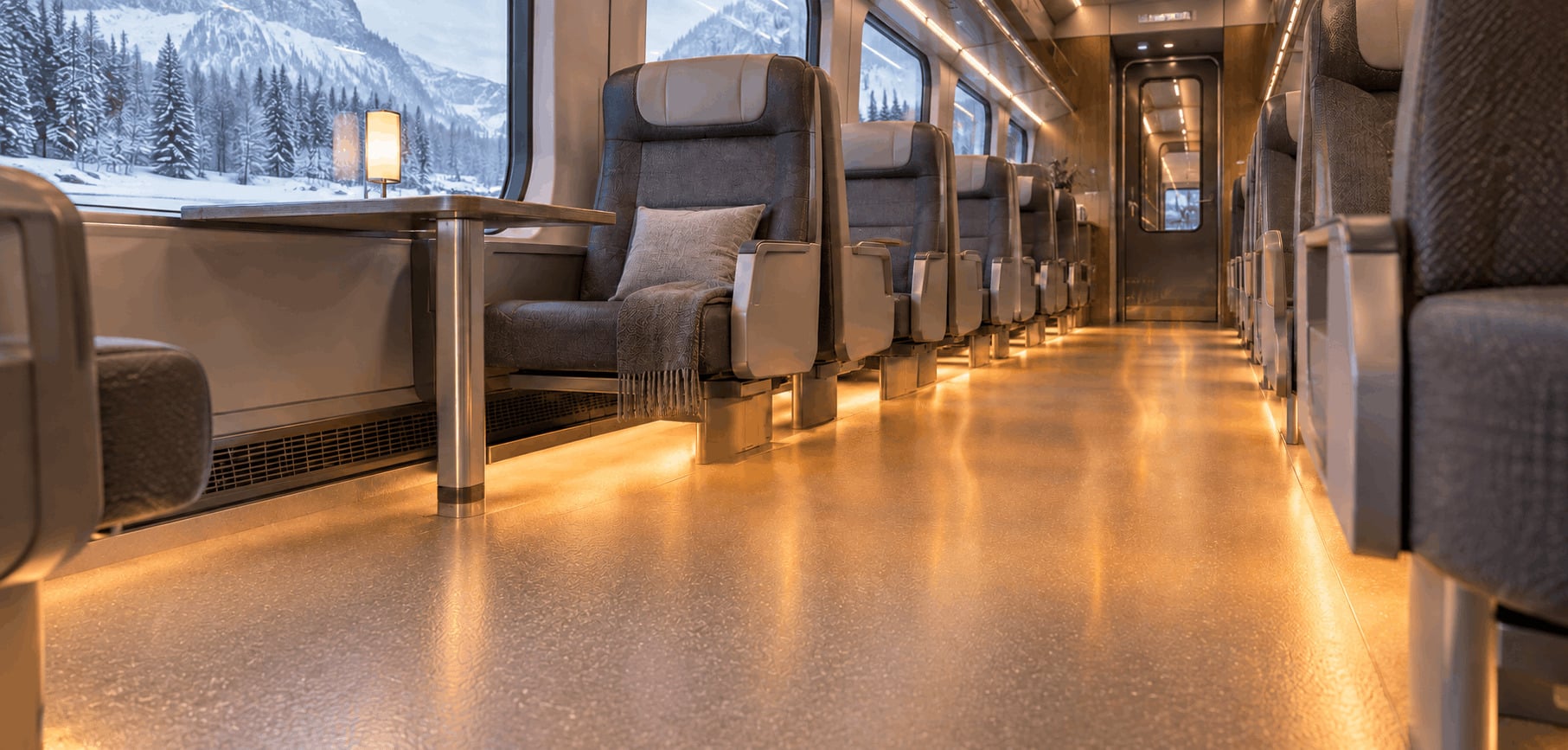
In railway vehicles, HVAC systems based on air convection represent the most widespread solution for managing temperature inside passenger cars. However, this configuration can present certain critical issues related to heat distribution.
Thermal transmission via air can generate temperature differences between different areas of the car, depending on the position of the vents, airflows, and operating conditions. Furthermore, air movement is an intrinsic part of how these systems function.
In the railway sector, onboard comfort and energy efficiency have become two central factors in the design of new trains.
Radiant underfloor heating is emerging as one of the most advanced technologies to improve the passenger experience and optimise HVAC system performance.
In this context, the Floor Heating Platform technology developed by Zoppas Industries has taken on a leading role, combining structural function and electric heating into a single modular system.
What is the Floor Heating Platform
Floor Heating Platform is a heated flooring system that integrates directly into the train structure. It is not a simple heating element, but rather a complete system that combines:
- Mechanical floor structure;
- Heating element;
- Thermal insulation;
- Sensors and control systems.
The platform is based on a sandwich structure made of aluminium surfaces, insulating material, and an electric heating system, designed to guarantee robustness, thermal uniformity, and long-term reliability.
How underfloor heating works in trains
The system utilises heating cables distributed within the panels, capable of generating heat uniformly across the entire surface. This heat is then radiated into the car interior, ensuring a homogeneous temperature distribution.
Compared to traditional HVAC systems based on air convection, integrating climate control with radiant floor heating offers multiple significant advantages:
- Improves perceived passenger comfort;
- Reduces temperature variations throughout the passenger car;
- Limits air movement.
These characteristics enable the platform to create a more stable and comfortable environment, even under severe weather conditions.
Modular platform for integration in trains
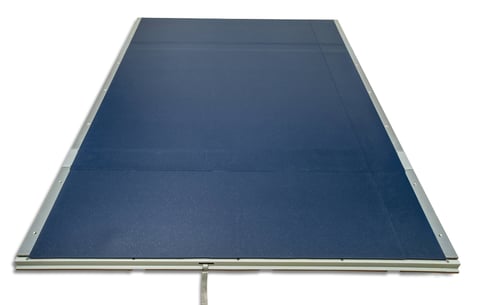
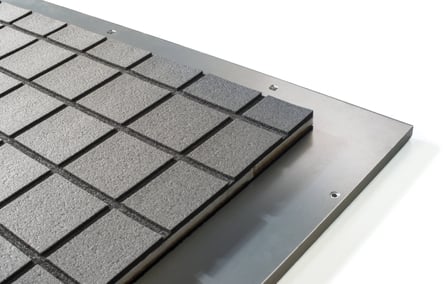
One of the defining features of the Floor Heating Platform is its modular architecture. The system consists of easily assembleable prefabricated panels equipped with quick electrical and mechanical connections, which allow for:
- Reduced installation time (under 1 hour/m²);
- Simplified assembly operations;
- Improved quality control in manufacturing processes.
Modularity also enables the floor configuration to adapt to complex layouts and variable geometries, eliminating the need to develop fully adaptable designs for every application.
Technical performance and long-term reliability
The heating platform guarantees high performance in terms of durability, resistance, and safety.
The main features of this solution are:
- Lifespan up to 30 years, thanks to the use of cable technologies and advanced materials;
- Reduced weight (< 14 kg/m²), which contributes to improving the train's energy efficiency;
- Temperature uniformity, with minimal surface variations;
- High mechanical strength, with load capacities up to 400 kg/m²;
- Protection and safety, featuring integrated temperature limiting systems and NTC sensors.
The performance of the heating floor is validated through laboratory testing and resistance trials against fatigue, shock, and vibration, in compliance with international railway standards.
Energy efficiency and reduction of consumption
Floor Heating Platform also makes a significant contribution to the overall efficiency of the train system. Thanks to its lightweight design and uniform heat distribution, the solution developed by Zoppas Industries is able to reduce energy demand compared to traditional systems, improving the efficiency of the integrated HVAC system and contributing substantially to the reduction of indirect CO₂ emissions.
The integration of radiant heating and climate control delivers the same level of comfort while consuming less energy.
Compliance with railway standards
The platform is designed to meet the primary regulatory requirements of the railway sector, including:
|
Standard |
Technical Description |
|
EN 45545 |
Fire safety requirements for materials and components |
|
EN 50121 |
Electromagnetic compatibility (EMC) for railway applications |
|
EN 61373 |
Shock and vibration tests for equipment on rolling stock |
|
EN 50153 |
Protective measures against hazards of electrical origin |
|
EN 17460 |
Quality requirements for adhesive bonding of railway vehicles and components |
|
EN 12663 |
Structural requirements for railway vehicle bodies |
|
ISO 10140 / 717 |
Assessment of acoustic insulation performance |
|
REACH / RoHS |
Environmental compliance and restriction of hazardous substances |
|
IRIS (in progress) |
International standard for quality management systems in the railway supply chain |
Compliance with these standards is a fundamental element for integrating the technology into modern railway projects.
The value of co-engineering
Floor Heating Platform requires advanced integration between electrical components, mechanical structure, and train architecture.
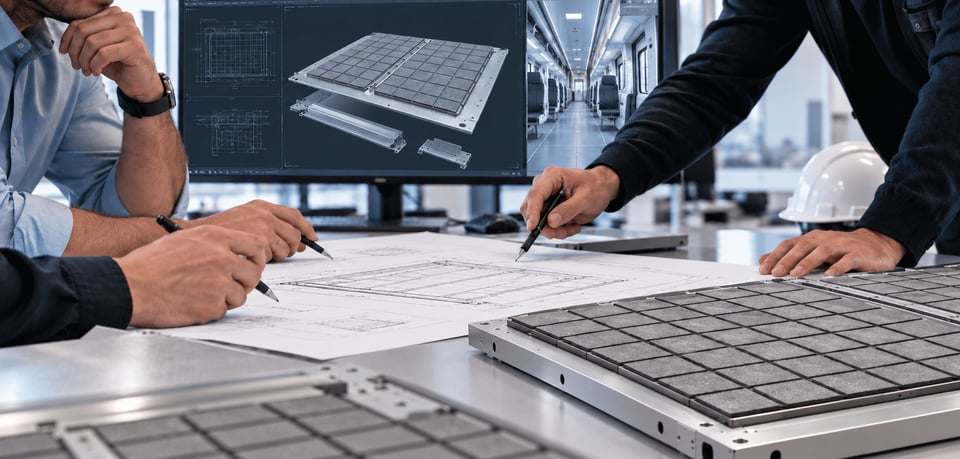
In this field, Zoppas Industries acts as a development partner, supporting rail manufacturers throughout the various design phases. This co-engineering approach allows the platform to be tailored to specific project requirements, optimising performance and integration while reducing industrialisation time and complexity.
A key technology for the future of rail
Growing attention to sustainability and energy efficiency is accelerating the adoption of innovative solutions in the railway sector. In this scenario, the Floor Heating Platform represents a strategic technology capable of combining comfort, reliability, and reduced energy consumption.